
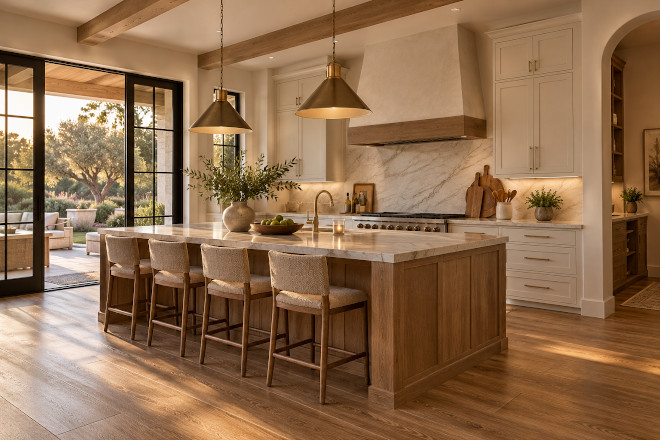
A wood-look floor sounds perfect for the kitchen or bathroom until splashes, damp bath mats, and a slow dishwasher leak join the conversation. Then the flooring question gets complicated fast.
Luxury vinyl flooring can work well in many kitchens and standard bathrooms when the specific product is approved for the room, the subfloor is dry and properly prepared, and every installation requirement is followed. Choose another material for shower floors, continuously wet areas, or any project where the manufacturer excludes standing water, radiant heat, or the existing substrate.
One distinction decides everything here: a waterproof plank is not a waterproof floor. Keep that in mind, and the rest of this guide falls into place.
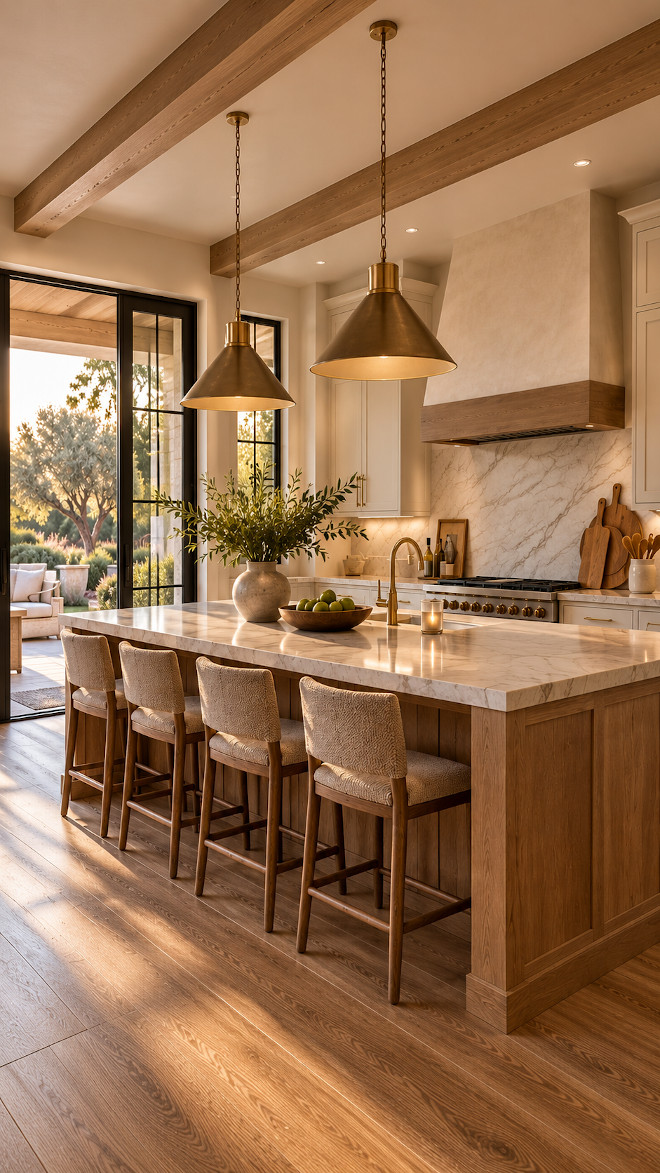
Yes, luxury vinyl can suit an ordinary kitchen or bathroom, but only when the product documentation permits that location and the installation protects the seams, edges, and subfloor underneath.
Homeowners keep choosing it for sensible reasons. It feels softer and warmer underfoot than tile, comes in convincing wood and stone looks, and requires little day-to-day maintenance.
A quick vocabulary note: LVP means luxury vinyl plank, while LVT means luxury vinyl tile. Both are multilayer products, and neither is the thin sheet vinyl of decades past.
Luxury vinyl flooring for kitchens handles routine splashes well when installed correctly. The real risk is the leak nobody sees, because a dishwasher line or refrigerator supply can quietly push water beneath a floating floor and let it travel for days before the first curling edge reveals the problem.
Bathrooms need a sharper distinction. A powder room or standard full bath is one thing; a true wet room is another. Unless the manufacturer expressly approves the complete assembly for use inside a shower enclosure, assume it is not approved.
If you’re considering wood-look luxury vinyl flooring, remember that your wall and cabinet colors can make a big difference in the overall look. Warm whites, soft creams, and subtle neutrals pair beautifully with natural wood tones. For more inspiration, explore Home Bunch’s Favorite White Paint Colors to find the perfect shade for your home.
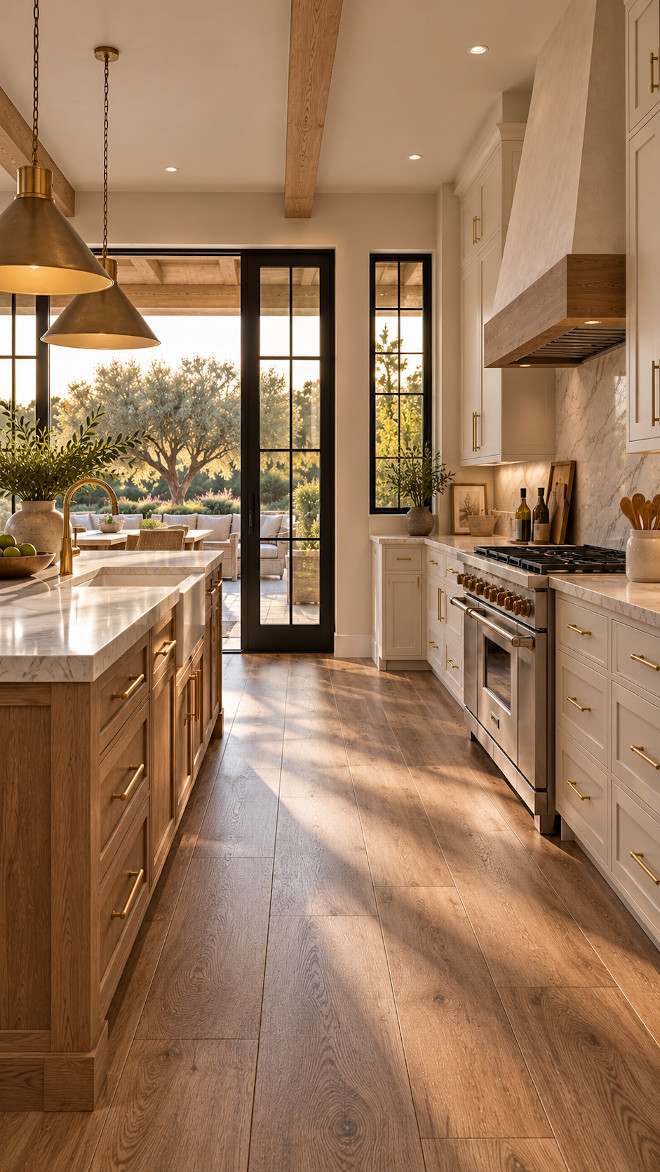
“Waterproof” generally means the planks will not swell or degrade from topical moisture exposure (often evaluated using ASTM F3261 or NALFA standards), while “water-resistant” signals limited protection, such as withstanding a spill for up to 24 hours before damage occurs. Don’t read either label as a promise about the whole room, the surrounding walls, or the subfloor below.
The label provides only part of the information you need.
Before buying, review the technical data sheet, installation guide, care manual, and warranty. Marketing copy rarely explains exposure limits or the exclusions that can void coverage when flooding or prolonged standing water is involved.
Need a little visual inspiration before choosing your flooring? Browse my Pinterest boards for beautiful kitchen and bathroom ideas, natural wood tones, and timeless finishes that might inspire your next renovation.
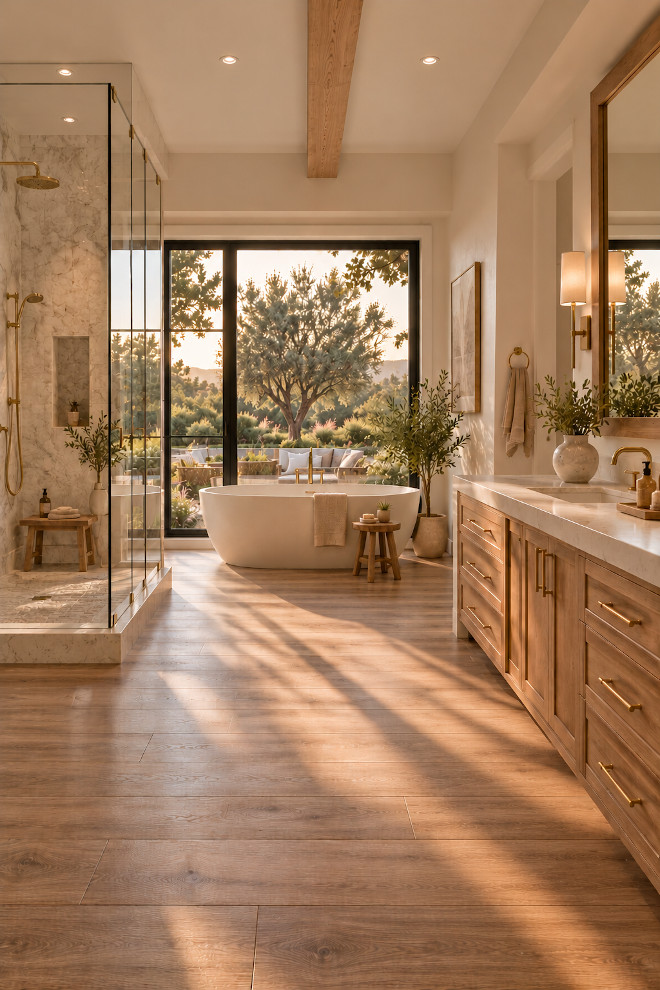
Water that slips past joints or perimeter gaps can stay trapped beneath the floor, where it may damage the underlayment or a wood-based subfloor even though the vinyl itself never swells. Baseboards and indoor air quality can suffer as well.
Toilets and tubs are common trouble spots. Pipe penetrations and transition strips at doorways are, too. Do not assume ordinary click-lock seams form a waterproof membrane unless the manufacturer says so in writing. They usually do not.
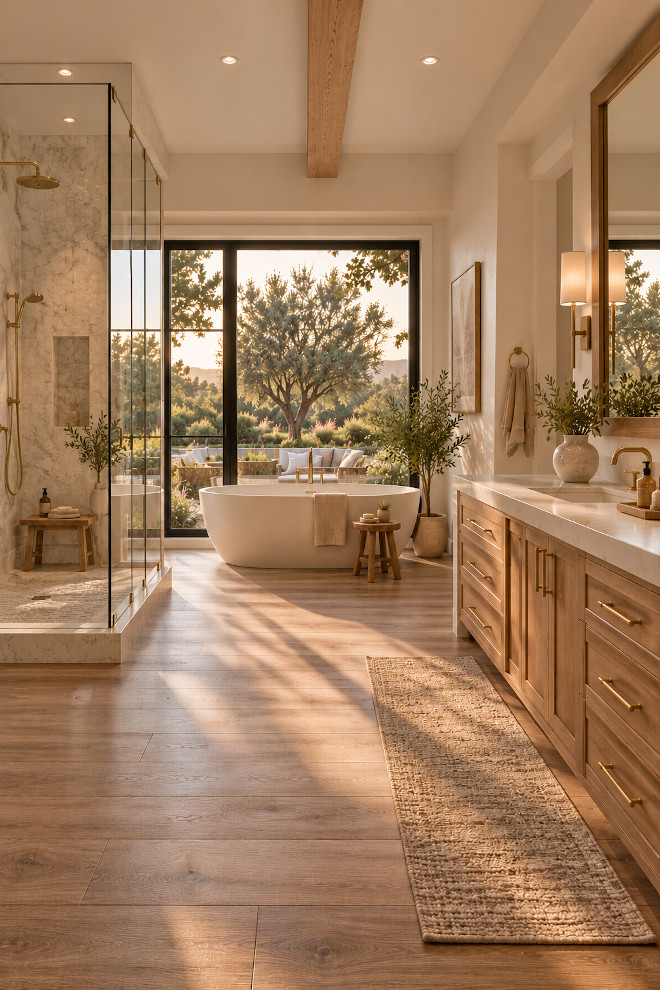
Print or download these six items for any product you are seriously considering:
Get the documents for the exact SKU, not merely the collection. Different colors and wear layers within the same line may carry different approvals.
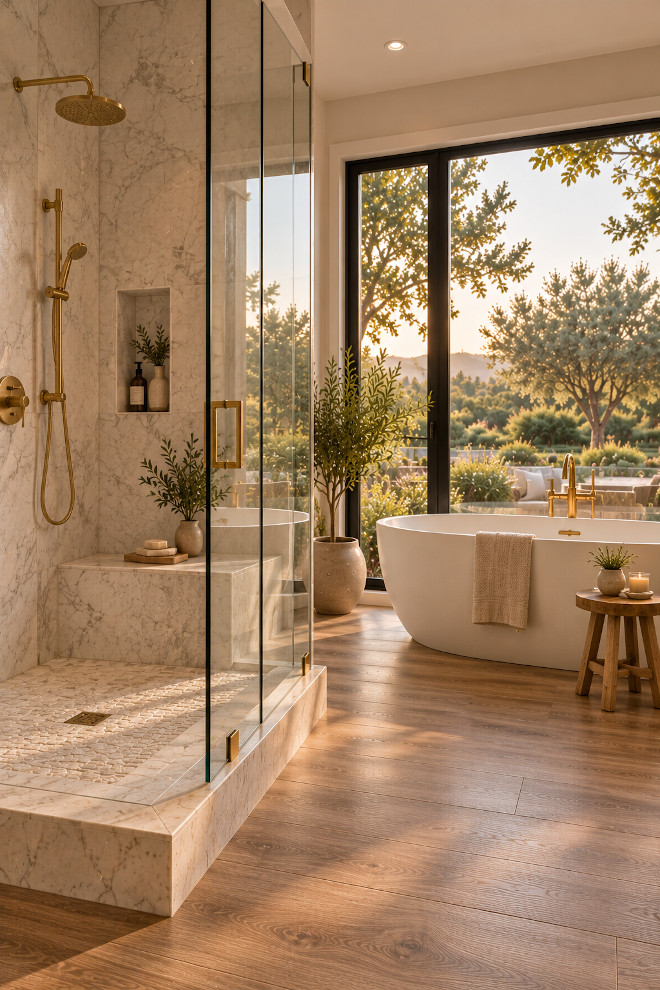
Before installing luxury vinyl in a moisture-prone room, check the substrate condition and flatness tolerance in the product instructions. Then read the moisture-testing requirements and radiant-heat limits in the same documents. The manufacturer’s paperwork, not the showroom display, determines the installation and warranty requirements.
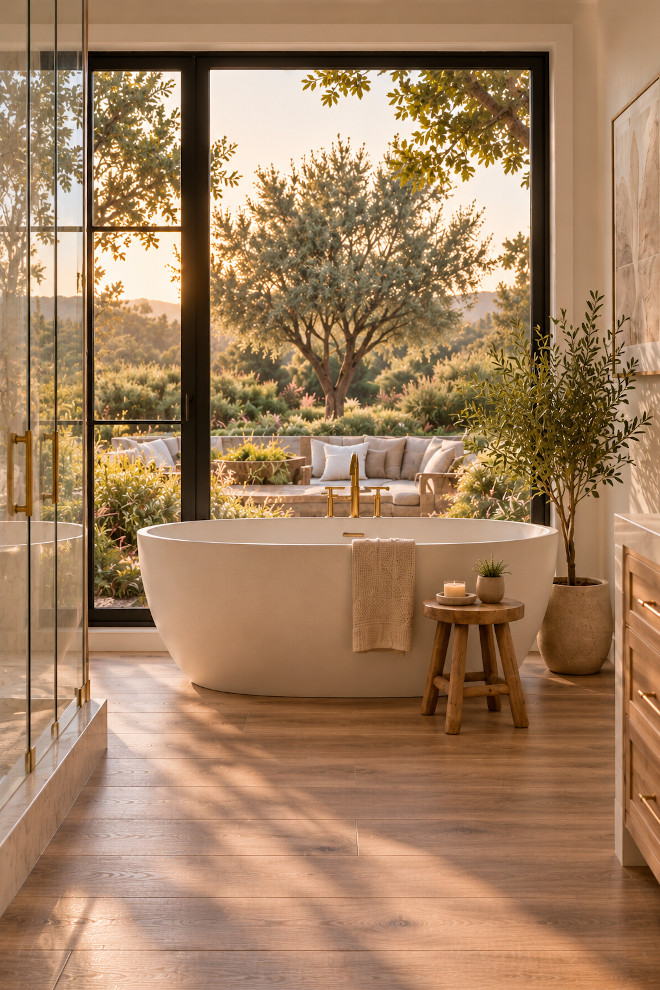
“Waterproof” flooring does not correct moisture rising through a concrete slab or leaking from plumbing behind a wall. The substrate must be structurally sound, flat within the manufacturer’s published tolerance, and able to pass any moisture test required for the installation method, such as an in-situ relative humidity (RH) limit of 80% to 85% for concrete slabs.
Cracked grout lines and deep depressions can show through a flexible plank. High spots can stress click joints. Preparation is essential, so choose a vapor-control system with your installer based on the substrate and installation method.
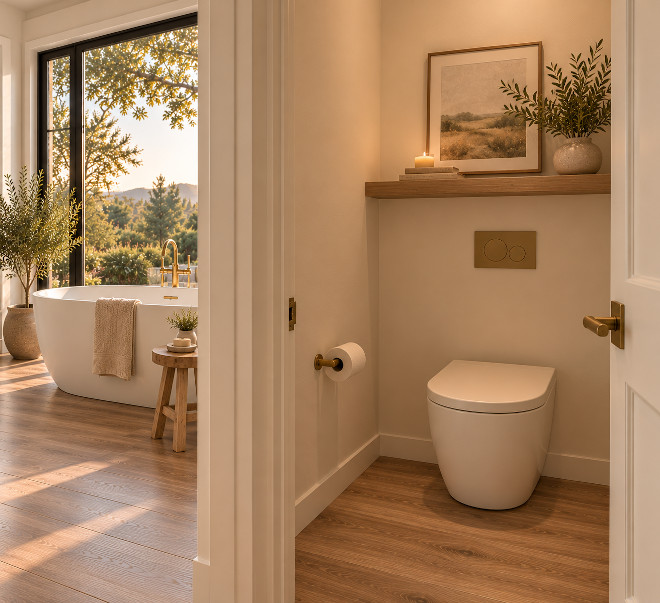
Luxury vinyl can often go over existing tile when the tile is firmly bonded and flat, and the flooring manufacturer approves that substrate in writing. Loose tiles or pronounced grout texture require correction first, and wide grout joints may need skim-coating so they do not show through the new surface.
No single option is best for every tile floor. LVP is practical where the added height does not interfere with doors or appliance clearances. Porcelain tile may be preferable where maximum water tolerance and a long service life matter, while removing an unstable tile floor is usually smarter than covering the problem.
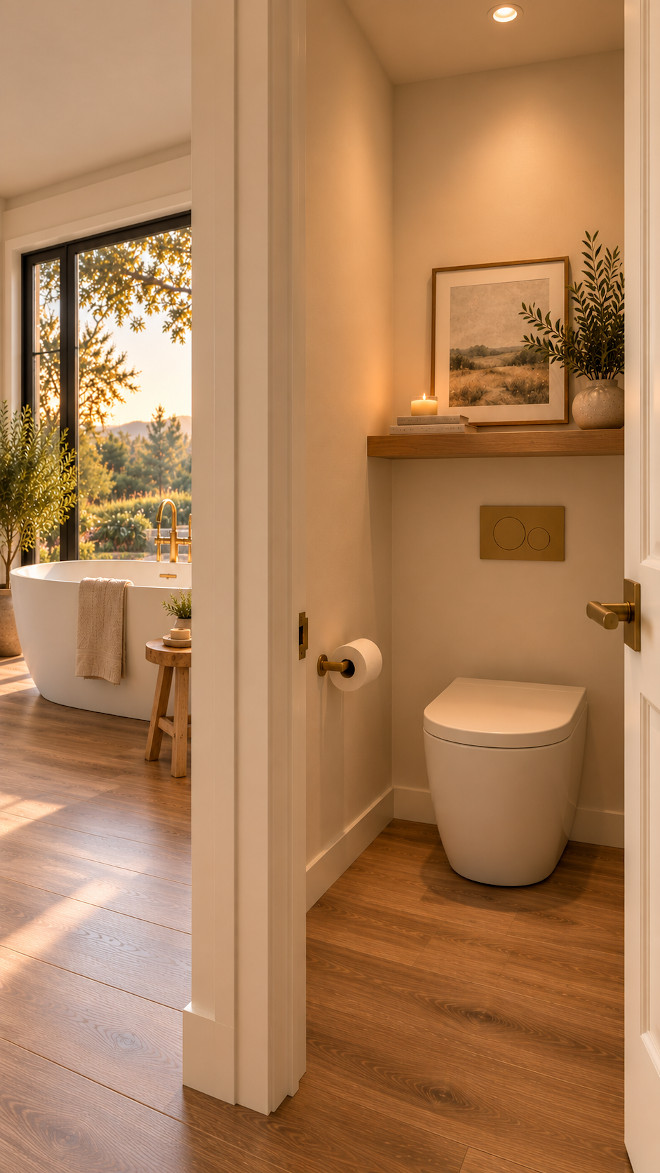
Doorway profiles must accommodate height changes without pinching a floating floor that requires a movement gap. Follow product-specific directions around tubs and toilet flanges, and take perimeter wall treatment seriously. Never improvise with caulk or fasteners that restrict required movement.
Moisture ratings, approved installation methods, subfloor tolerances, and room limits vary widely between product lines, even within one collection. When you compare luxury vinyl flooring options, those four documents are exactly what separates a floor that survives a wet room from one that does not.
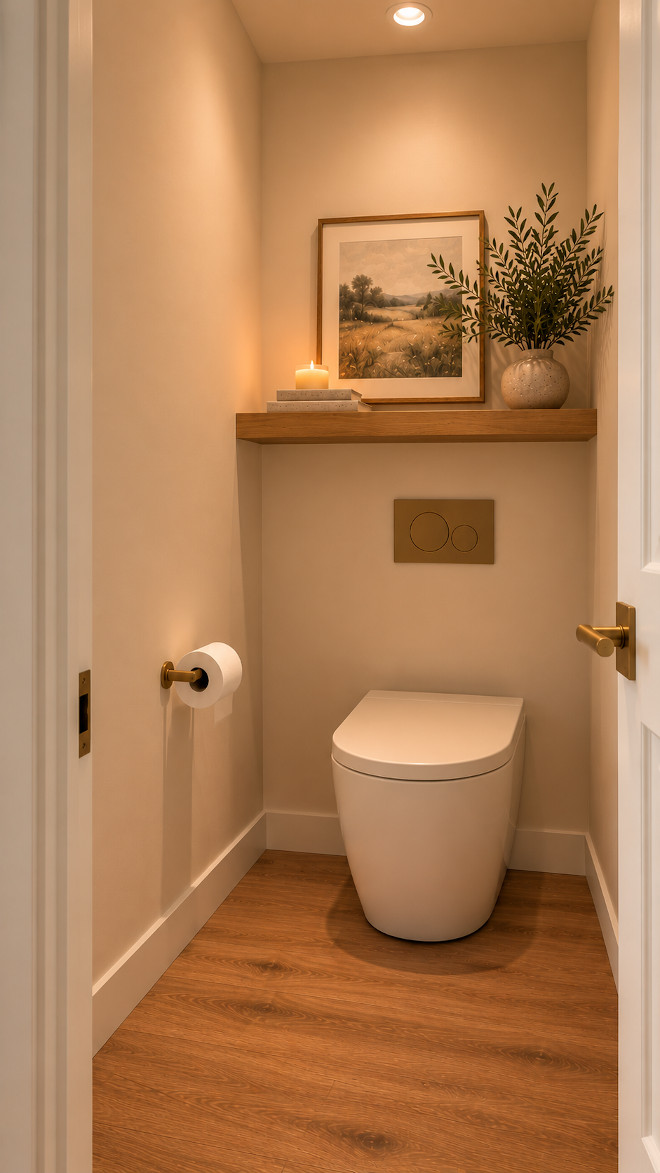
Luxury vinyl flooring can go over some radiant-heating systems only when the product and heating system are compatible, and the floor stays below the manufacturer’s stated temperature limit, typically capped at 85 degrees Fahrenheit (29 degrees Celsius). No universal limit exists because requirements vary by product.
Excessive heat can cause dimensional changes, joint problems, or wear-layer discoloration. That damage can also void the warranty.
Embedded hydronic systems and electric mats or films have different requirements. Approval for one type does not carry over to another.
If the flooring and heating-system instructions conflict, do not proceed without written clarification from both manufacturers. Ask whether rugs or bath mats could trap heat against the surface, and follow any startup schedule provided in the installation guide.
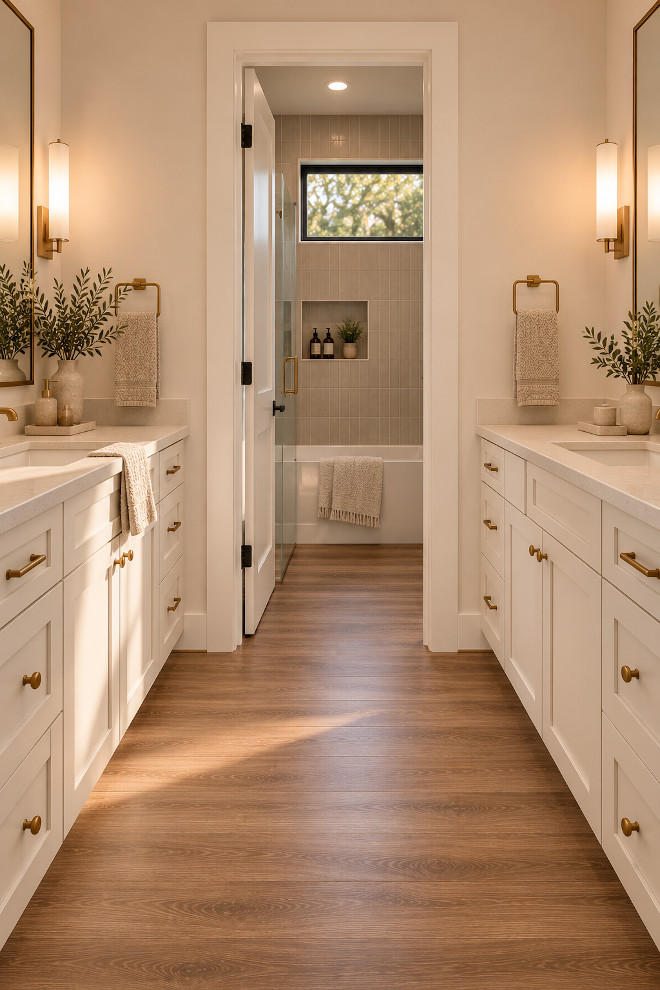
The main downsides are vulnerable seams and edges, plus a strong dependence on careful subfloor preparation. Heavy appliances can dent the flooring. Grit and dragged chairs can scratch it, spot repairs are rarely simple, and some buyers may prefer the resale appeal of natural wood or tile.
Rigid-core products may offer durability and dimensional stability, but rigid does not mean indestructible. Product construction alone doesn’t mean a floor is suitable for bathroom use.
Covering tile has its own drawback: the new layer can hide substrate problems you would otherwise catch and fix first.
Alternatives deserve consideration. Porcelain tile is the stronger candidate for shower floors and regularly soaked spaces. Sheet vinyl has fewer seams than planks or tiles, while properly protected hardwood may offer greater resale appeal in dry areas of the house.
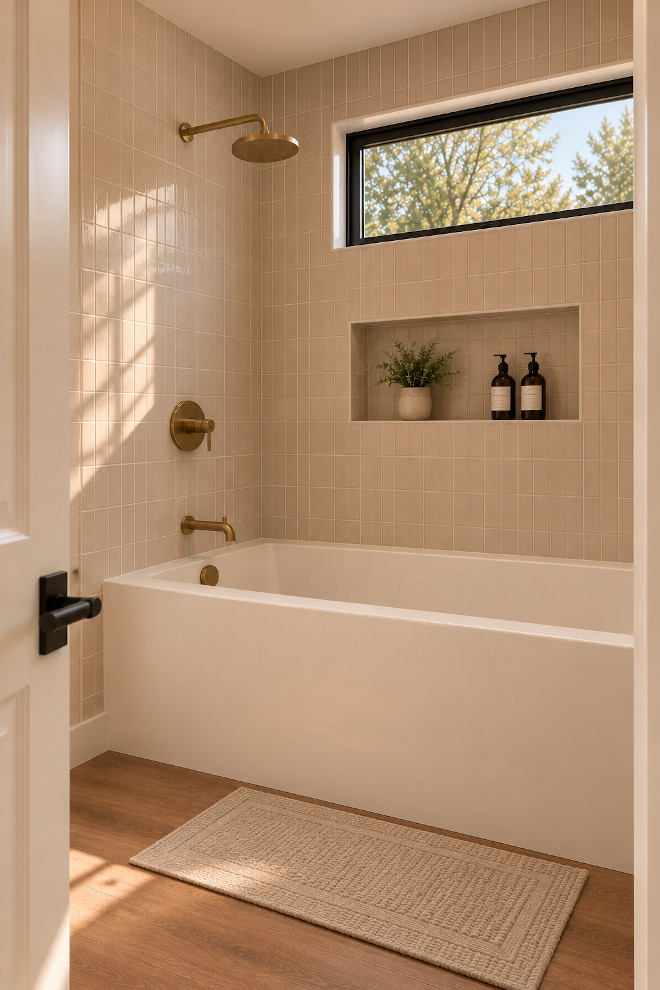
Clean luxury vinyl flooring by removing grit regularly, wiping spills promptly, and damp-mopping with a manufacturer-approved neutral cleaner. Avoid abrasive pads, steam cleaners, and chemicals the care manual does not approve.
“Waterproof” does not mean you can pour a bucket of water across the room. Excess cleaning liquid can reach joints and edges, while abrasive debris may dull the wear layer over time.
Protect the floor where it works hardest. Use felt pads under chairs and manufacturer-approved protection under appliances. Avoid generic vinegar or bleach recommendations because care instructions and warranty exclusions differ by product.
In a kitchen, wipe up grease with a damp cloth and approved cleaner before it sets. In a bathroom, clean cosmetics and puddles near the tub promptly because standing water should not remain on the floor.
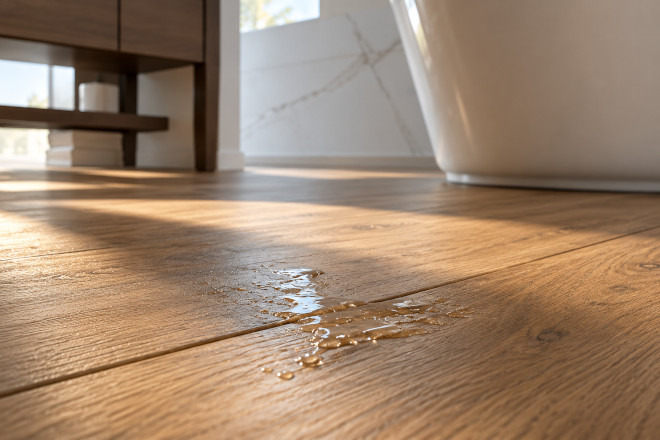
Luxury vinyl is typically a multilayer plank or tile with a photographic design layer and protective wear layer, while traditional sheet vinyl comes in rolls and can cover a small room with very few seams. Greater thickness does not mean better water protection. Format, construction, installation method, and warranty terms all matter.
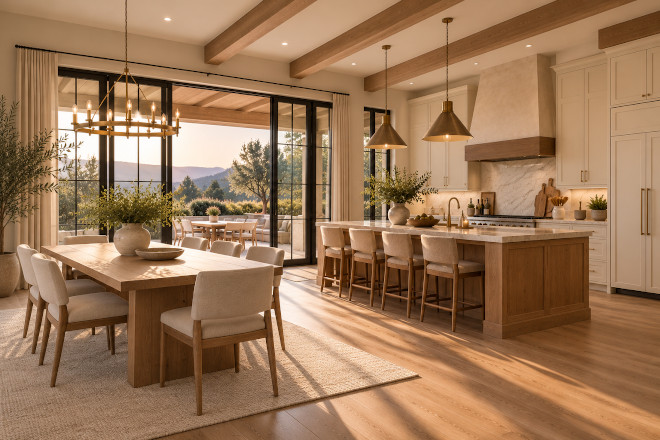
A 2,000-square-foot project typically costs between $6,000 and $14,000 fully installed, though material grade and regional labor can change the total by thousands of dollars. Freight, substrate repairs, demolition, and transition strips can also raise the final price.
Price the exact SKU you have in mind and request an itemized local estimate. Installers commonly order extra material for cuts and future plank replacements, but the right amount varies with the room layout and your installer’s guidance.
When planning a kitchen renovation, it’s also worth considering how your flooring will complement your cabinetry. If you love warm, natural finishes, take a look at this Before and After Kitchen Remodel with White Oak Cabinets for inspiration on creating a timeless, cohesive space.
Tile is usually the better choice for a shower floor or curbless wet room and for projects where long-term resistance to heat and standing water outweighs softness underfoot or a wood-look finish. However, a wet-area tile assembly still requires a proper waterproofing system behind and beneath it. Tile alone is not the waterproofing layer.
The short version, room by room:
| Room or condition | Usually suitable? | What must be verified |
| Kitchen | Often | Leak exposure, appliance clearances, seams, and substrate |
| Powder room | Often | Toilet-flange details and perimeter instructions |
| Standard bathroom | Sometimes | Standing-water limits, edge treatment, and warranty |
| Shower floor or wet room | Usually no | Explicit approval for the complete wet-area assembly |
| Radiant-heated room | Product-specific | System type, temperature limit, and installation method |
| Existing tile substrate | Product-specific | Bond, flatness, grout joints, and finished floor height |

Cool for a normal kitchen or conventional bathroom when the manufacturer approves the exact product, and you follow the installation instructions carefully. Fool when “waterproof” is treated as permission to ignore a leak, skip the subfloor moisture test, or assume approval the manufacturer never gave.
Before ordering, compare samples in the actual room and review the technical documents for the exact SKU. Then have your installer verify the complete floor assembly in writing. That preparation can determine whether a spill remains on the surface or reaches the subfloor.
And once you’ve chosen the right flooring, don’t forget about the finishing touches! The right cabinet color can bring the entire space together, especially when paired with beautiful wood-look floors. For more ideas, explore these 5 Cabinet Paint Colors Approved by Interior Designers and discover timeless colors for your next renovation.
In collaboration with Tile Mart.
A big thank you to everyone who helped bring this post to life.
Notes: All images and credits belong to their respective owners.
How are you doing, my friends? I’m happy to say that I’m finally feeling better after a terrible cold that made its way through our entire family. and it certainly took its time leaving us. There were plenty of sleepless nights, very little energy, and lots of homemade chicken noodle soup with lemon and ginger. Honestly, I can’t think of anything more comforting or nourishing when your body needs a little extra care. Let me know if any of you want the recipe. 😉
I hope you’re enjoying these beautiful October days, my friends. Stay healthy, stay cozy, and thank you for spending a little of your day here with me.
We’ll talk again soon. 🤎
Thank you so much for being here.
Xxo,
Luciane
✨ Subscribe to receive new home tours directly to your inbox
✨ Follow along on Instagram: @HomeBunch
✨ Save your favorite rooms on Pinterest to revisit design ideas anytime
(Click on items to shop)

Disclaimer: Thank you for shopping through Home Bunch. For your shopping convenience, this post may contain AFFILIATE LINKS to retailers where you can purchase the products (or similar) featured. I make a small commission if you use these links to make your purchase, at no extra cost to you. Shopping through these links is an easy way to support my blog and I appreciate and I am super grateful for your support! I would be happy to assist you if you have any questions or are looking for something in particular. Feel free to contact me and always make sure to check dimensions before ordering. Happy shopping!
















“Dear God,
If I am wrong, right me. If I am lost, guide me. If I start to give-up, keep me going.
Lead me in Light and Love”.
Have a wonderful day, my friends and we’ll talk again tomorrow.”
with Love,
Luciane from HomeBunch.com
No Comments! Be The First!